
Thatcher & The Campaign
Why I Admire Margaret Thatcher and the Falklands Campaign
A personal reflection.
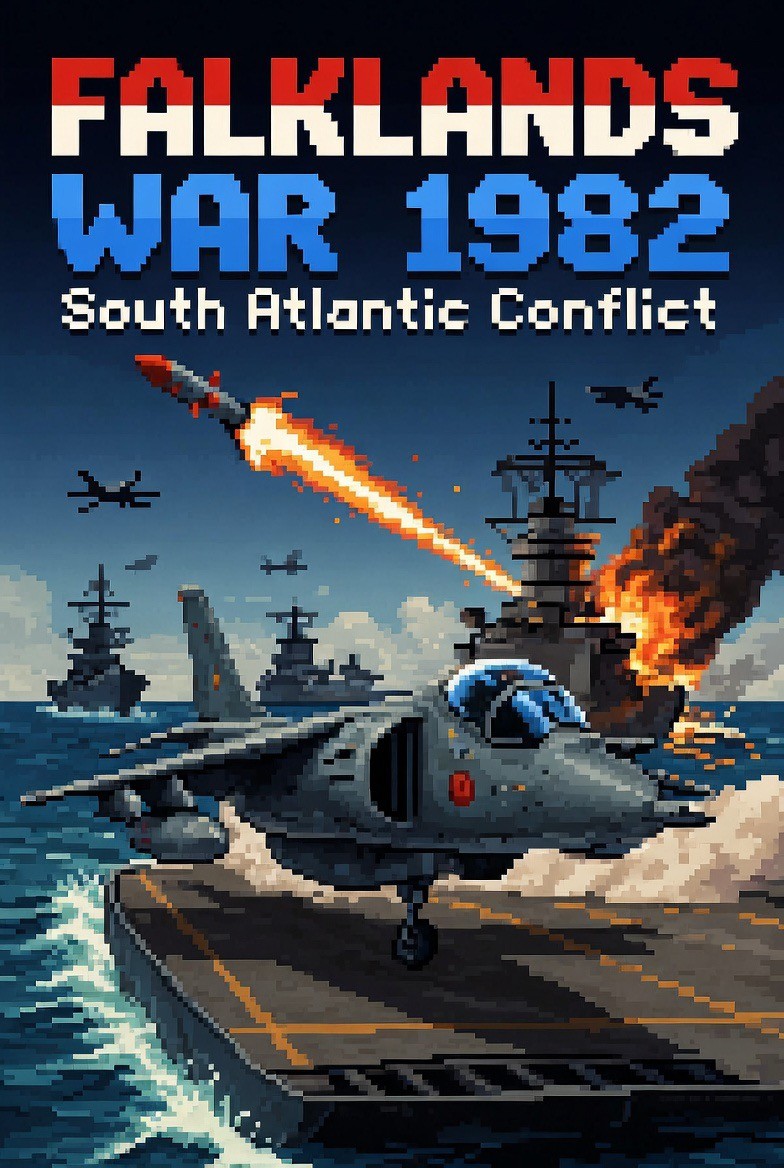
There are moments in a country's history that come to feel like a settling of accounts — a clear, unambiguous answer to the question of what kind of nation it intends to be. For me, the Falklands campaign of 1982 is one of those moments. And at the centre of it stands Prime Minister Margaret Thatcher.
It is fashionable, now, to be sceptical of conviction politicians. Fashionable to assume that anyone who acts decisively must be acting recklessly, and that anyone who speaks plainly must be hiding something. But re-read the record of those weeks in April 1982, and what stands out is how lonely Thatcher's position was, and how few of the people around her thought what she did was even possible. The Foreign Office was dismayed. The Americans, for a long while, were not on side. Senior figures in her own party privately thought she would lose, and lose badly.
She sent the fleet anyway.
Whatever one thinks of her domestic record — and reasonable people will always differ on that — the decision to dispatch the Task Force was an act of unusual moral clarity. British citizens had been invaded. British territory had been seized. A military dictatorship had calculated that Britain in the early 1980s was too tired, too divided and too diminished to do anything about it. Her answer was to prove them wrong. She trusted the professionalism of the Royal Navy, the courage of the Royal Marines and the Paras, and the sheer competence of a generation of officers who had spent the Cold War quietly preparing for a war they never expected to fight in the South Atlantic. They did not let her down.
What strikes me, looking back, is how rare that clarity has become. The Falklands feels — to me, at least — like one of the last times Britain stuck up for itself without apology. Not in arrogance, not in pursuit of empire, but in defence of its own people and its own promises. The islanders had been told, in effect, that they would remain British for as long as they wished to be. When that promise was tested, it was honoured. There is something quietly moving about a country, however reduced in the world, still being the kind of country that keeps its word.
I do not romanticise the war. Two hundred and fifty-five British servicemen did not come home. Many more carried wounds, visible and invisible, for the rest of their lives. The Argentine dead — most of them very young conscripts — deserve their own remembrance. War is the worst of human business, and nothing about the Falklands changes that.
But the principle the campaign defended — that small, distant communities of free people are not to be handed over to dictatorships because it is inconvenient to defend them — is one I still believe in. And the leader who, against the advice of so many, insisted on that principle, is one I still admire.
That is why I keep coming back to this story. In games, in writing, in the conversations I have with my own children about history. The Falklands is not just a campaign on a map. It is a reminder that nations, like people, sometimes have to decide what they will and will not accept — and that the answer matters.



emperormarkus
Ready for Battle?
Explore strategy games, military history, and retro-inspired campaigns built for players who love tactical warfare and immersive storytelling.