Why I Wrote The Book
Why I Decided to Write The Book
On Echoes from the South Atlantic — a 1986 alternate history of the Falklands.
Some books are written because the writer has something to say. Others are written because the writer has something they cannot stop thinking about. Echoes from the South Atlantic falls firmly into the second category.
I have loved military history for as long as I can remember. Both of my parents served in the British military, and the language of regiments, ships and squadrons was simply part of the furniture of childhood. I grew up looking at photographs of carriers and reading about the men who flew from them. The Harrier — that strange, stubby, vertical-jet aircraft that nobody outside the Fleet Air Arm and the RAF really expected to amount to much — captivated me from the start. There is something almost defiant about the Harrier: an aircraft built for a niche so specific that, when its moment finally came, it owned it completely. The Falklands turned the Sea Harrier from a curiosity into a legend, and in doing so it captured the imagination of a young reader who has, frankly, never quite recovered.
From there it was a short hop to Tom Clancy and the technothrillers of the late Cold War, and from there to a lifetime of reading about carriers, submarines, theoretical tank battles in the Fulda Gap and naval engagements that, thank God, were never actually fought. Alternate history was always part of the appeal. What if the Soviets had moved? What if the war had gone differently? What if 1982 had been the prelude rather than the conclusion?
That last question is the one that became Echoes from the South Atlantic. The novel imagines a 1986 in which the dispute over the Falklands flares up again — and this time the war is harder, longer and more uncertain. It is a story about the Royal Navy of the mid-1980s, about the men and women who would have had to fight that second war, and about the politicians, journalists, families and adversaries on the other side who would have had to live through it. I wanted it to be technically honest — the right ships, the right aircraft, the right weapons — but also to be, above all, a story about people.
The other reason I finally sat down and wrote the thing is, candidly, Artificial Intelligence (“AI”).
I have always had ideas for books. What I have never had is the time, the discipline or the research support to turn those ideas into something finished. Working on Echoes with an AI companion changed that. Suddenly the long evenings of cross-checking technical details — the loadout of a Sea Harrier, the cruising speed of a Type 42 destroyer, the exact phrasing a Buenos Aires newsroom might have used in 1986 — were no longer a barrier. I could think out loud, test scenes, argue about characters, and have a partner that would push back when something did not ring true. The novel is mine — every choice, every scene, every line is mine — but the process of getting there was made possible, in a very real sense, by tools that did not exist a few years ago.
That feels worth saying. We are living through a moment in which passion projects that would once have stayed in the heads of busy people can actually be finished. For someone like me — full-time job, family, the usual demands of life — that is genuinely transformative. I do not think AI replaces writers. I think it gives more people permission to become one.
Echoes from the South Atlantic is the result. I hope you enjoy it.
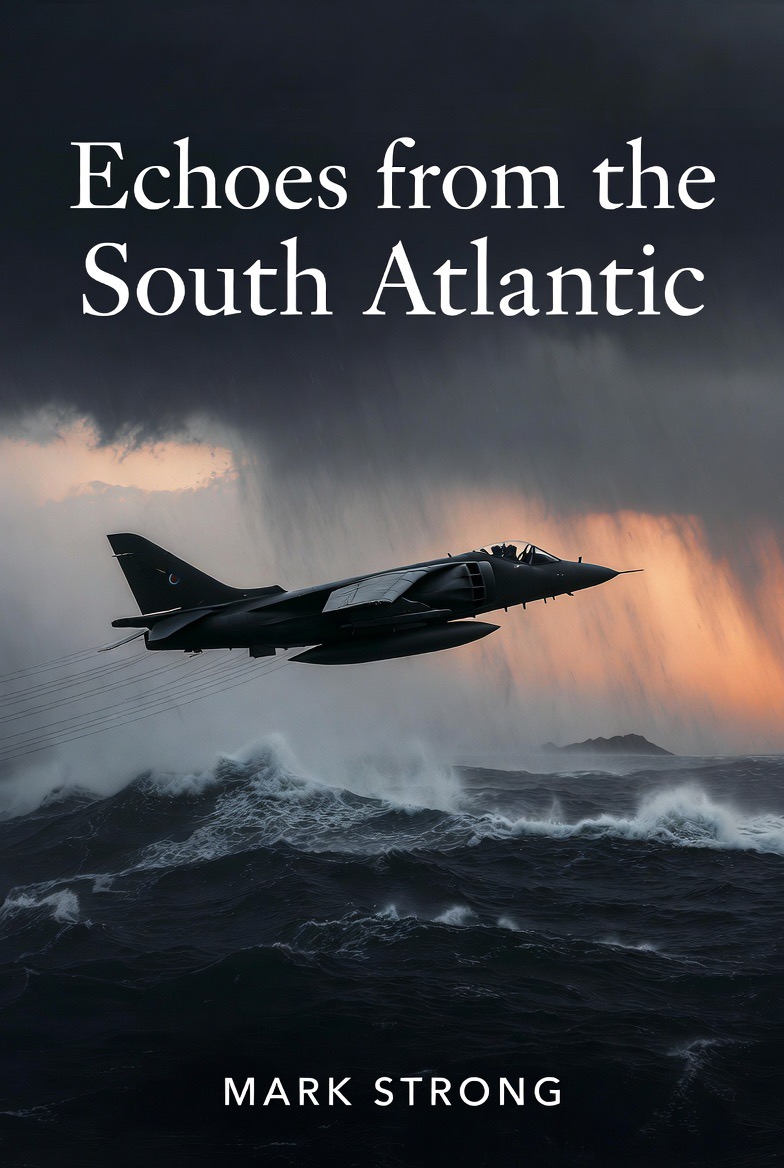
AVAILABLE ON KINDLE
An alternate history novel by Mark (Emperor Markus).
emperormarkus
Ready for Battle?
Explore strategy games, military history, and retro-inspired campaigns built for players who love tactical warfare and immersive storytelling.